

Issuing
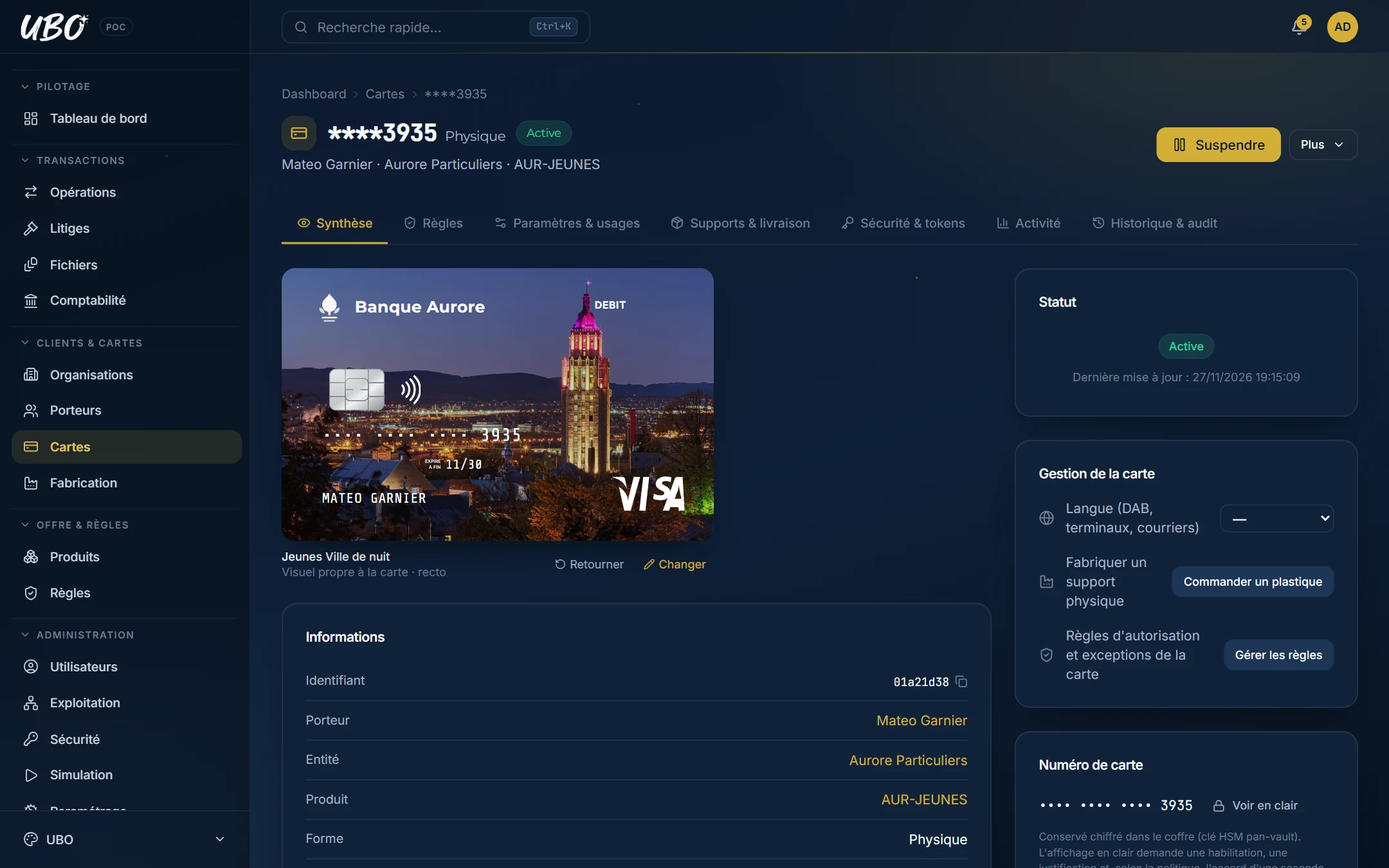
Product ranges, card designs made in a studio, EMV chip profiles, limits. Cardholders, accounts and cards, physical or virtual, created through the portal, the API or a file.
UBO is a payment card issuing and processing platform, offered as a white label. A bank, a neobank or a programme manager launches its cards under its own brand without building or running its own card system: UBO authorizes payments in real time, integrates the networks’ clearing, handles disputes, keeps the accounting and steers the manufacturing of the cards.
Several banks share the same platform, isolated down to the database: each one only sees and changes its own data, its products, its cardholders and its rules.
Issuing
Product ranges, card designs made in a studio, EMV chip profiles, limits. Cardholders, accounts and cards, physical or virtual, created through the portal, the API or a file.
Authorization
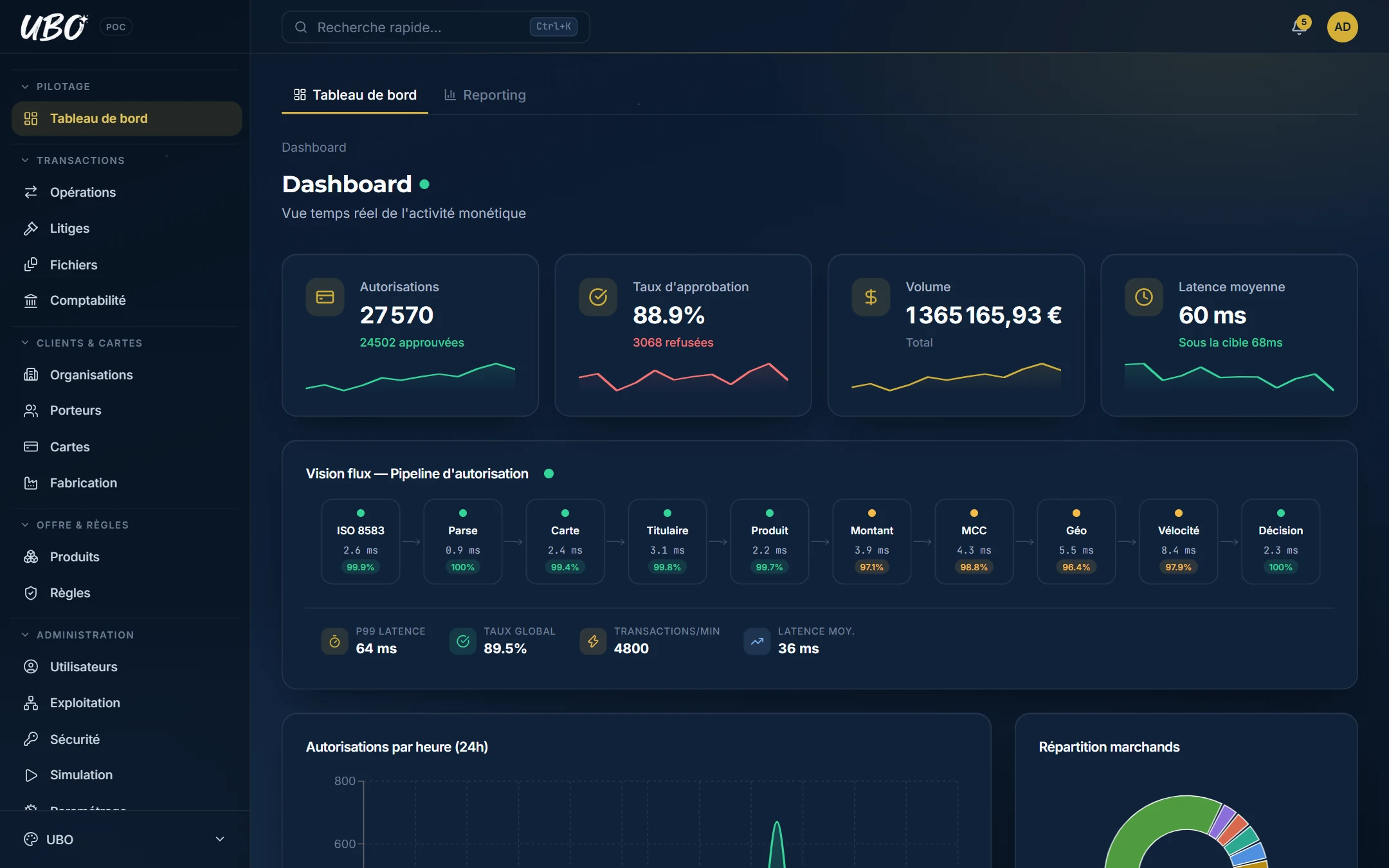
The networks’ requests (ISO 8583 messages) go through six steps: decoding, card identification, validation (PIN, CVV, chip cryptogram), the bank’s rules, reservation on the balance and the limits, response. Each decision is recorded and explained.
Clearing
The networks’ BASE II files are received over SFTP, checked by their totals, integrated line by line and matched with the authorizations. A presentment without authorization is flagged.
Disputes
A dispute is a case: disputed transactions, encrypted evidence, network and internal deadlines, financial decisions approved by a second person above a threshold.
Accounting
Each financial event produces its double-entry postings, per the bank’s accounting scheme; each day closes into an accounting report.
Manufacturing
The cards to make go to the personalisers (signed and encrypted file, or API); each plastic is followed until delivery.
All the bank’s teams work in the same portal, each with its rights: customer service finds a card or an operation, the business sets its products and rules, fraud reviews its alerts, back office handles its disputes and files, accounting follows its days.
Whatever the portal does goes through the API: the portal is just one of its clients. The bank’s systems call it with a service account (OAuth 2.0), receive its signed webhooks, read its events on Kafka and exchange files over SFTP.